
Loading search...
Loading search...
Loading site search...
Loading site search...
Loading site search...
Loading...
Loading site search...
Loading site search...
Posted 22 January

Crucial research into the impact of climate change on property valuations has earned a 天美视频 academic a prestigious national award.
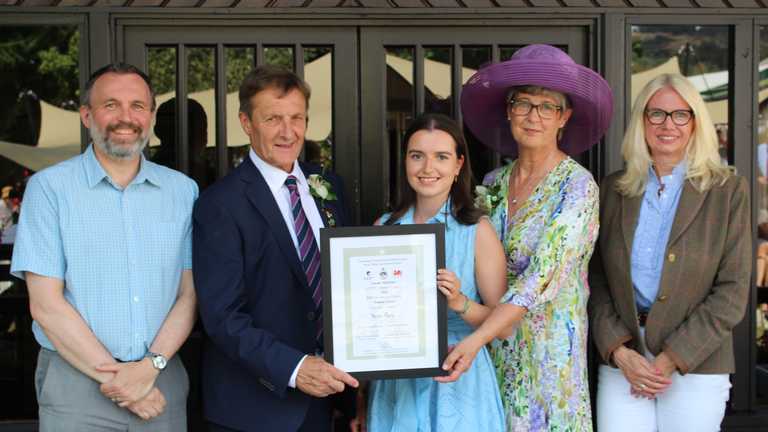
Dr Oluwaseun Ajayi, a Senior Lecturer in the Harper Adams Business School has been named as the winner of the Sarah Sayce Award 2025 for his research into how property asset valuations fail to consider the impact of climate change and how this ultimately translates into a financial risk.
The award was named after the late Professor Sarah Sayce, who had a long and distinguished career as both a practising chartered surveyor and as an academic.
It is supported by the Royal Institution of Chartered Surveyors, the Property Research Trust, and the Aubrey Barker Fund, and Dr Ajayi is its second recipient for his paper,
He said: “The paper examines a fundamental blind spot in property markets, that climate risk is widely acknowledged - yet rarely priced properly.
“Using London and the Thames Estuary as a live case study, the research shows that many property assets appear financially robust today while carrying long-term exposure to flooding and climate stress that is not reflected in their valuations.
“In practical terms, the study demonstrates how climate risk remains ‘invisible’ within standard valuation methods and develops tools that translate future climate exposure into present-day financial metrics that investors, valuers and policymakers can actually use.”
Dr Ajayi added that institutions underestimate the impact of this mispricing at their peril as it can have tangible effects on the financial institutions upon which we all rely.
He added: “Real estate underpins pension funds, public revenues and household wealth.
“When climate risk is left outside valuation models, markets look stable until they are forced into sudden repricing, often after extreme events or regulatory shocks. That pattern is economically disruptive and socially costly.
“The importance of this work lies in reframing climate change from a distant environmental concern into a material financial risk that can, and should, be anticipated.
“Making these risks explicit allows institutions to plan earlier, allocate capital more intelligently and avoid abrupt corrections that damage confidence in the market.”

Dr Ajayi has been at Harper Adams for six months and is seeking to continue further research projects as part of his work at the University.
He said: “Working at Harper Adams has been intellectually enabling.
“The University provides a rare combination of academic seriousness, applied focus and genuine collegiality. I am particularly grateful to Dr Fiona Williams, my line manager, and Emma Pierce-Jenkins, the Acting Head of the Business School, for stimulating an environment of trust, encouragement and intellectual freedom that allows research of this depth to develop.
“That atmosphere - supportive but rigorous - is essential for scholarship that aims to engage industry and policy rather than remain abstract. I have found Harper Adams to be a place where ideas are not only welcomed but sharpened.
“I would very much welcome collaboration with colleagues, industry partners and public bodies who are interested in climate risk, valuation practice and long-term resilience in the built environment.”
Speaking about winning the award, he added: “It was deeply humbling.
“Sarah Sayce’s work consistently challenged the profession to move sustainability from aspiration into operational reality.
“To have this research recognised within that tradition was both affirming and a reminder of the responsibility that comes with producing work that speaks beyond academia.”